

Hanging Around in Graveyards
For 'literary' purposes...

UPCOMING WRITING WORKSHOP AHOY!
Write What you Know: Setting & Place — Tues 31 March
Let’s build fictional worlds together…
(more info below)
I used to alternate between three or four different routes to school, and each one included walking through a graveyard. The one with the fish weathervane and ancient church bell. The one with two swinging gates, worn round and smooth by generations of hands. The absolutely gigantic one on the hill which, in my teenage years, became an oddly tranquil place to get stoned in the evenings. The deconsecrated one — now a community centre surrounded by gravestones — where I’d spend entire summers running feral while my mum volunteered at the charity jumble sale. I vaguely remember being told off for clambering on the 200-year-old tombs, but if they weren’t meant for climbing, why were there footholds carved into the corners, exactly the right size for a little foot? The slabs on top would become hot plates in the sun — the perfect spot for sunbathing cats and small children eating cross-legged packed lunches, throwing crumbs to the magpies and planning my next imaginary adventure.
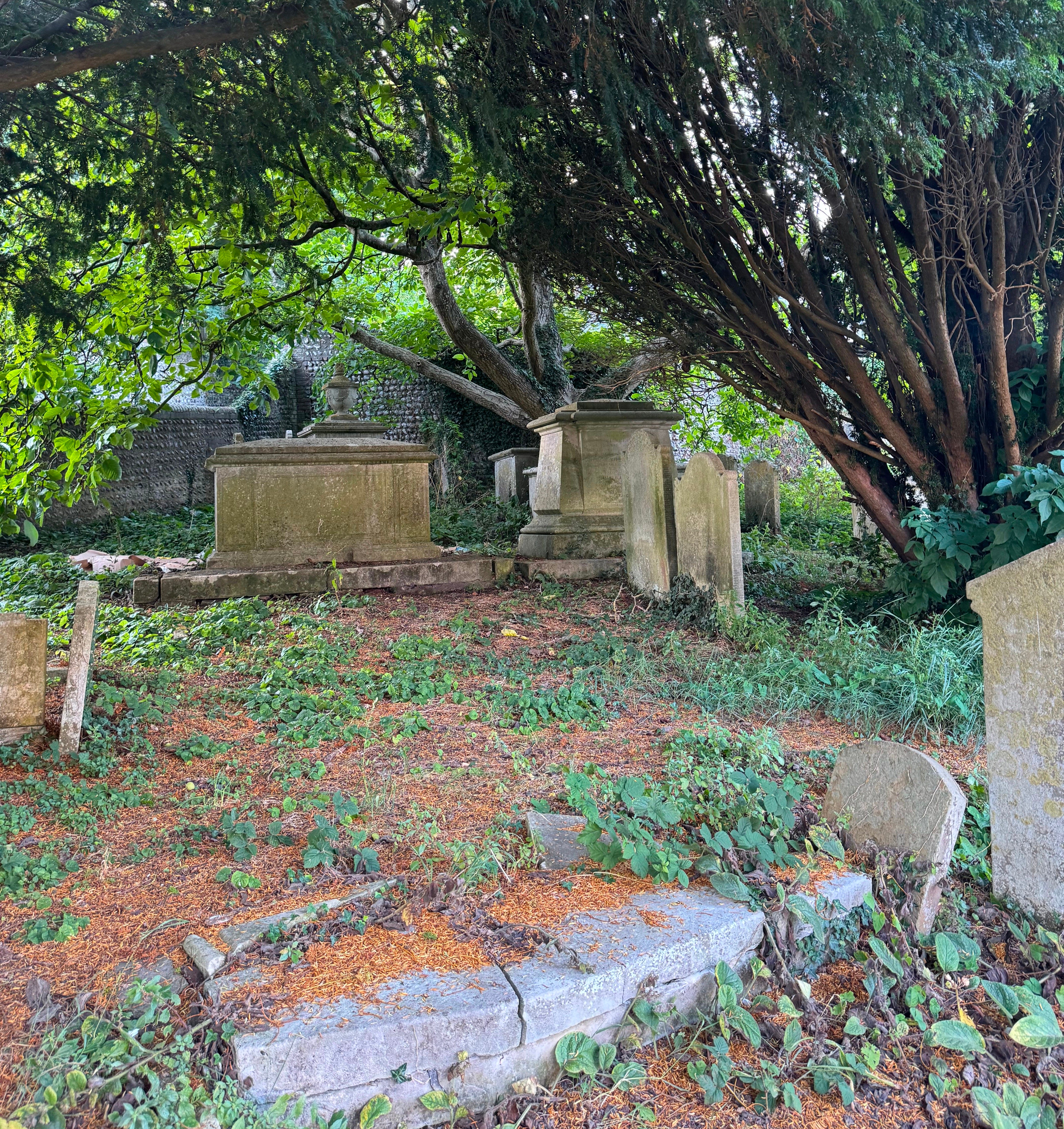
I’m slightly more respectful of graves now (although if, one day, a scrappy little kid wants to sit on my grave and make up stories, I’d be quite happy with that), but I will still always detour through a churchyard whenever I can. They’re also a staple for dog walking routes, which is where I happened to come across the inspiration for one of my current works-in-progress — the grave of an 18th century smuggler “unfortunately shot” in the head while stashing goods down an alleyway.
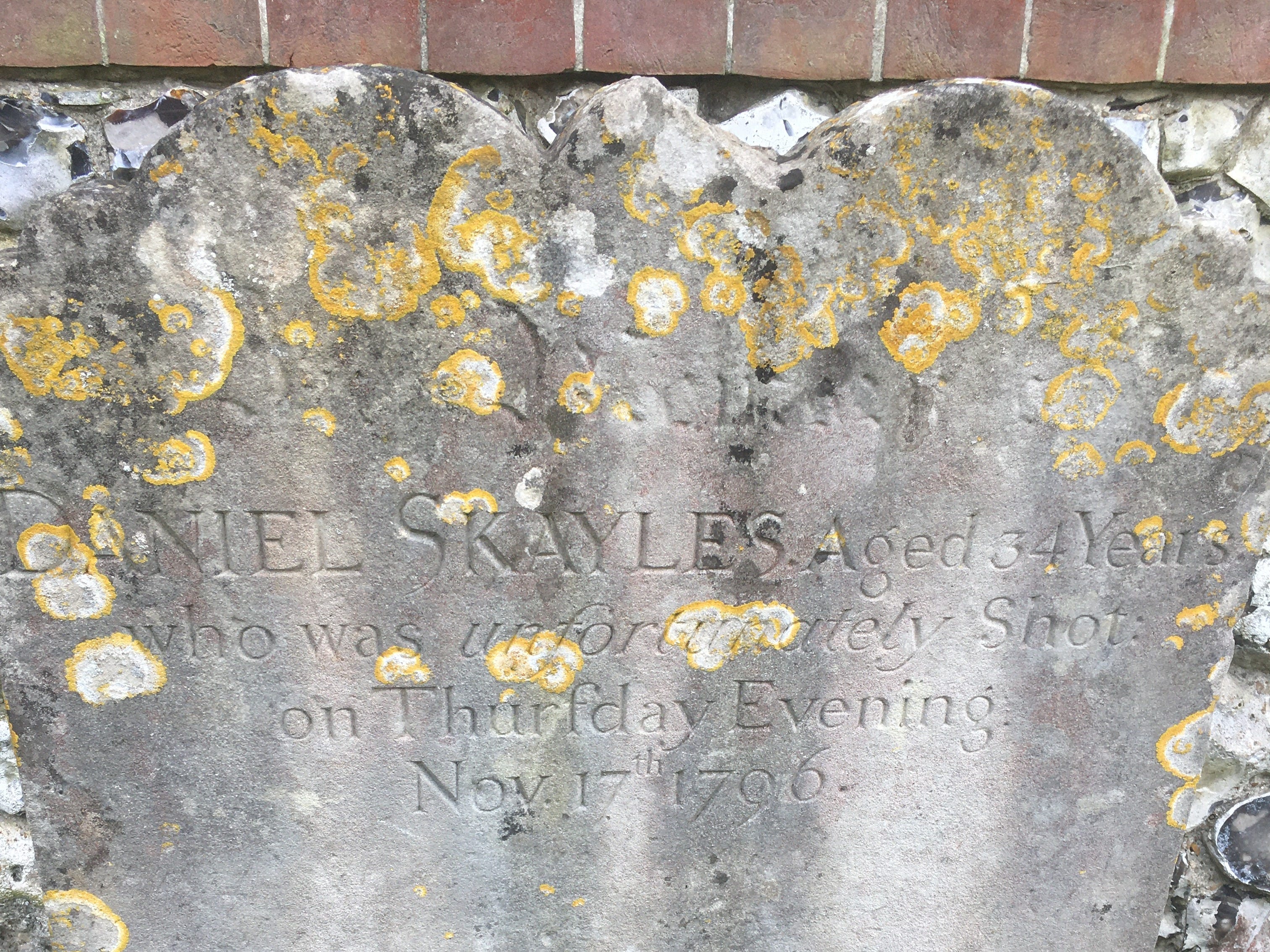
And what started as an idle historical research project became a ten-year obsession (and hopefully, one day, a TV drama) that has led to a whole lot of hanging around in graveyards across Sussex and beyond.
Because of course you could just Google a list of common names from the historical era you’re writing about — OR you could spend hours wandering around graveyards scouring birth/death dates and noting down olde-timey names. And of course, once you’ve chosen your characters, you are obliged to pat each mossy headstone bearing their namesake whenever you pass by, like visiting old friends.
Even if you’re not looking for specific story inspiration, it’s so interesting to see how naming trends have shifted throughout the generations. Or how far back a particular ‘modern’ sounding name actually goes. Or seeing the same names skipping down from grandparent to child to grandchild. Or just imagining tiny baby Agneses and Geoffreys from hundreds of years ago, scampering about between these very stones.
In a particularly magical stroke of luck, deep down a research rabbit hole, I even came across a diary written by a man who once owned a whole load of the suburbs (then villages) near where I live.
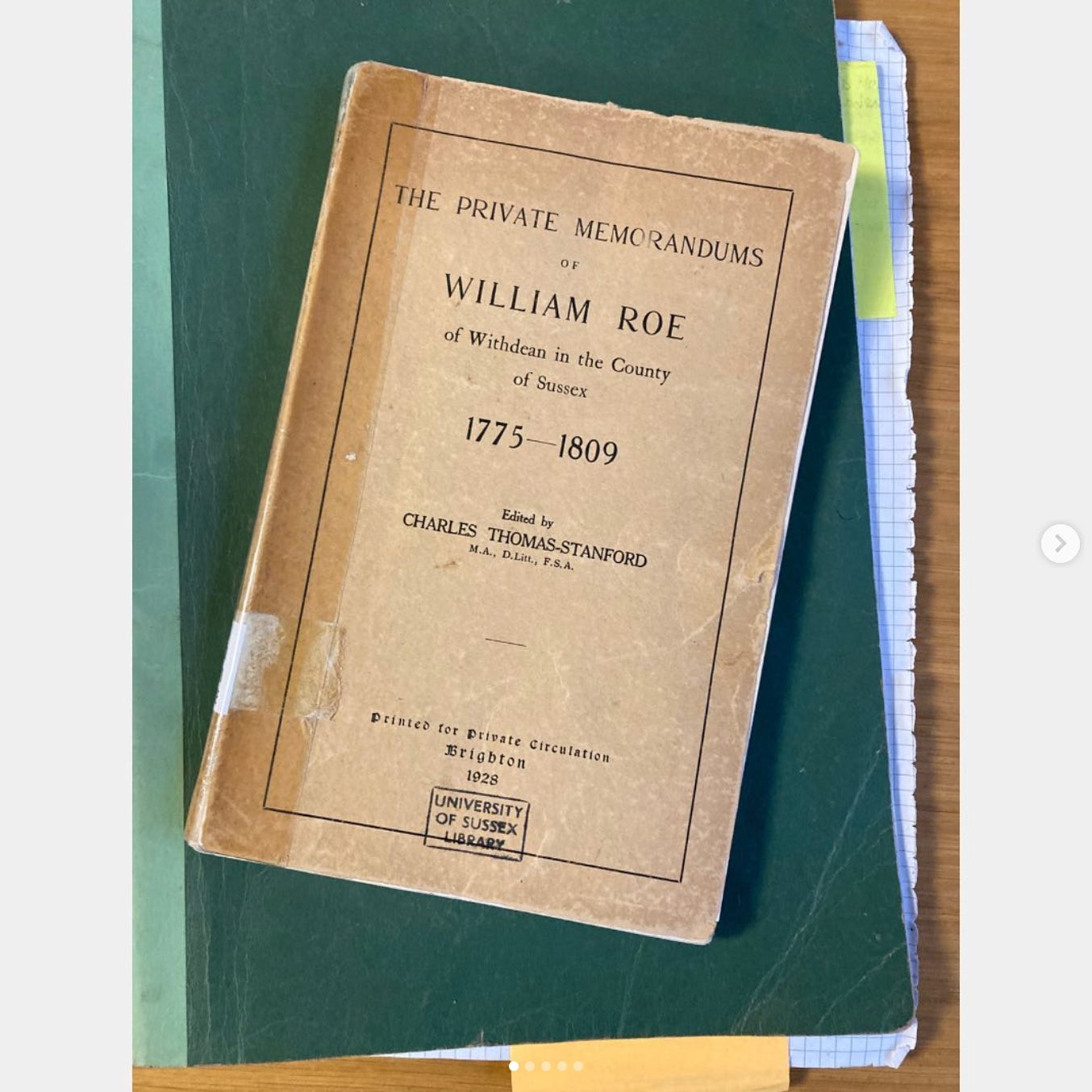
It’s mostly a lot of fairly boring legal stuff and obsessive checking of land boundaries, but then there’s a throwaway passage in which the author describes planting a 5ft yew tree beside the local church in 1800.
The same church I walk past almost every day with my dog. The same churchyard that just so happens to contain a massive old twisted tree. I’ll admit to having to double check what a yew actually looks like, but lo and behold:
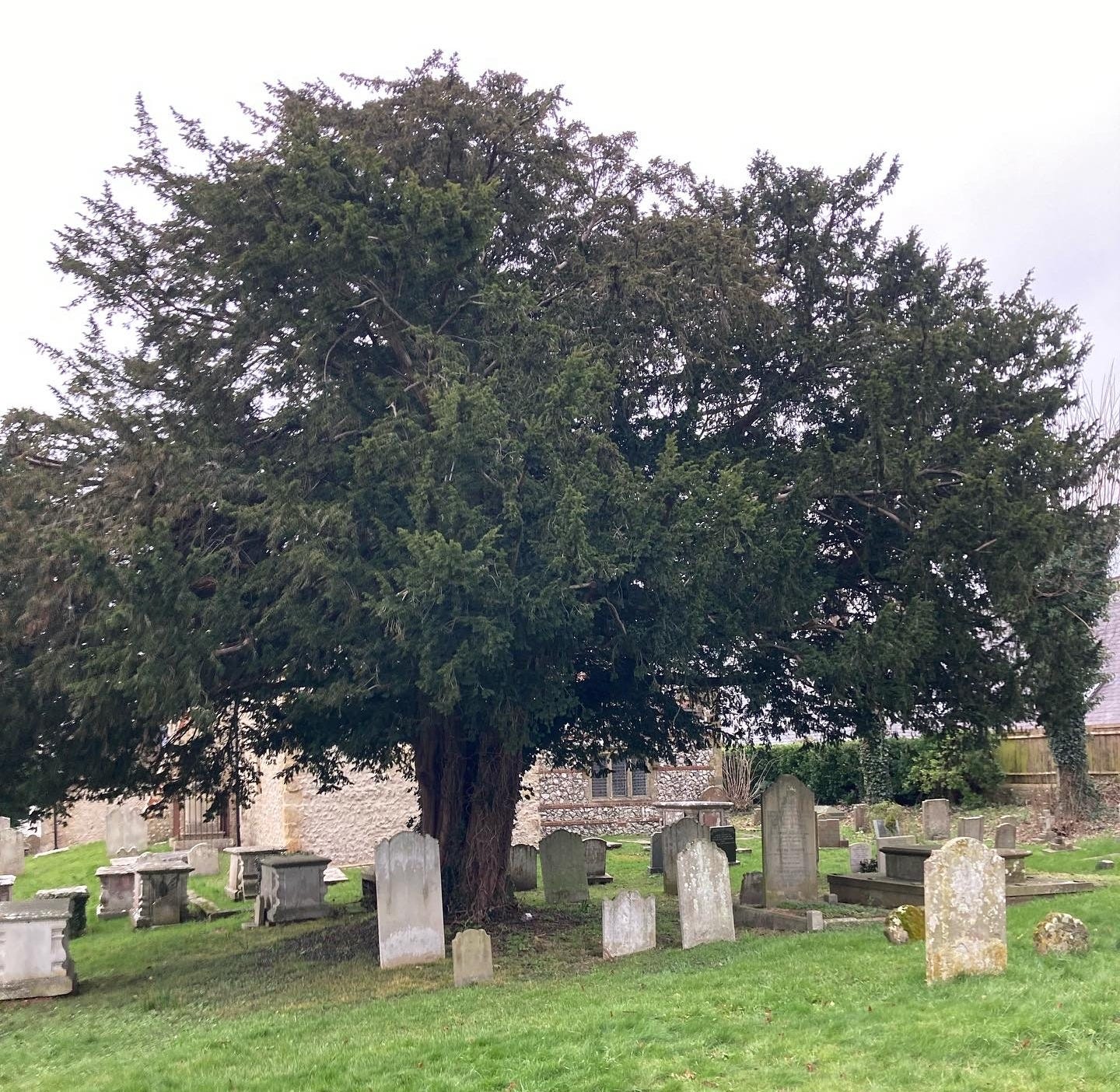
There she is, 226 years later. How bizarre to know the exact date it was put there, and the name of the person who patted down the soil around its roots. To know what the weather was like that day. To see the surname of someone he chatted to about the logistics of sheep grazing on a gravestone nearby.
So many lives. So many stories…
The church itself is much older than the yew — parts of it going back to the 12th century — and the lettering on its closest graves has worn away entirely. Depending on the day, my dog can be a little selective about whether we walk the full loop around it or if we just pass on through, but without fail she will stop and stare at that big ol’ yew before deciding. I assume, to confer with something I can’t see. It has become a cue:
“You wanna say hi to the ghosts today?” I’ll ask. And she’ll ponder a moment more before making her choice, yay or nay — I assume, based on whether the ghosts fancy our company or not.
To be honest, there are so many pictures of graves on my camera roll I’ve lost track of where some of them came from, but no matter how many times we walk through the same churchyards, I still keep discovering new things. Tiny, innocuous details that turn anonymous names and lumps of stone into people again.
Like these good old reliable reminders of mortality:
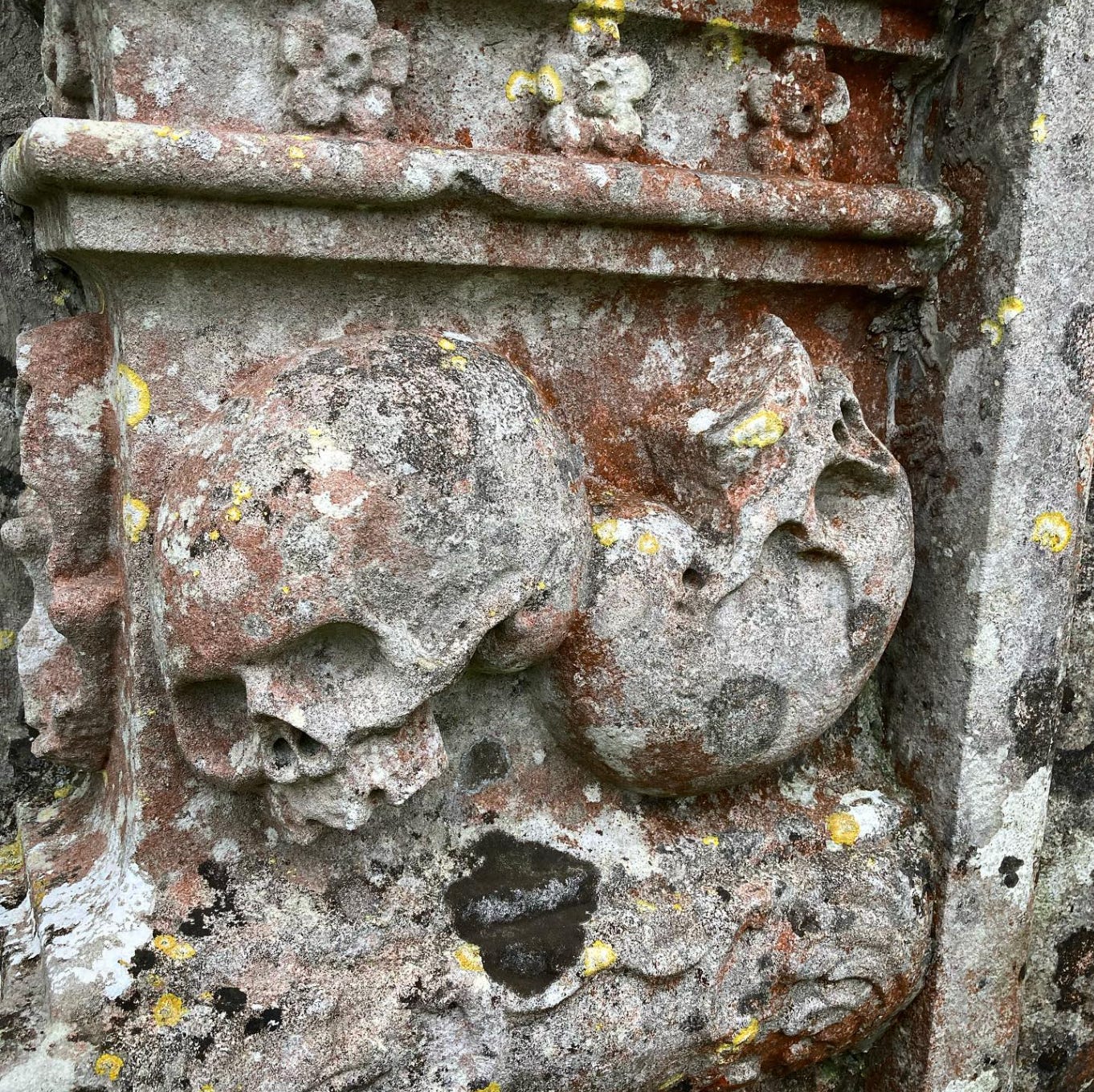
Or this alleged ‘pirate’ grave in Rottingdean, which you’d assume would have a similar skull and crossbones motif, but instead has this hourglass:
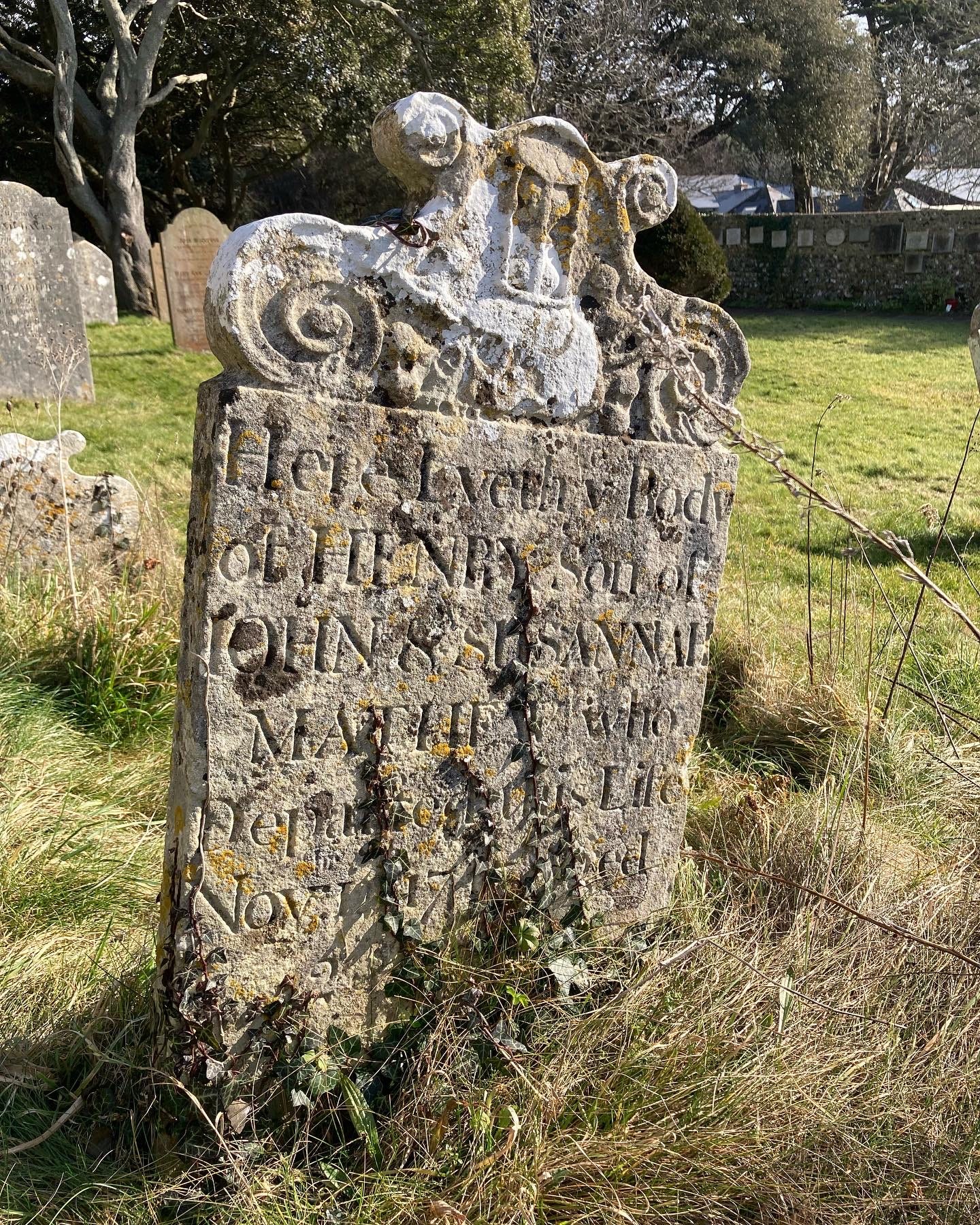
An obligatory dose of pirate research later, and I learned that contrary to popular belief, the Jolly Roger traditionally featured an image of the devil, sometimes holding an hourglass — a reminder to both the pirates’ victims and to themselves that death is coming for all of us (and most likely soon if you were seeing or hoisting such a flag).
Gotta love a memento mori, eh?
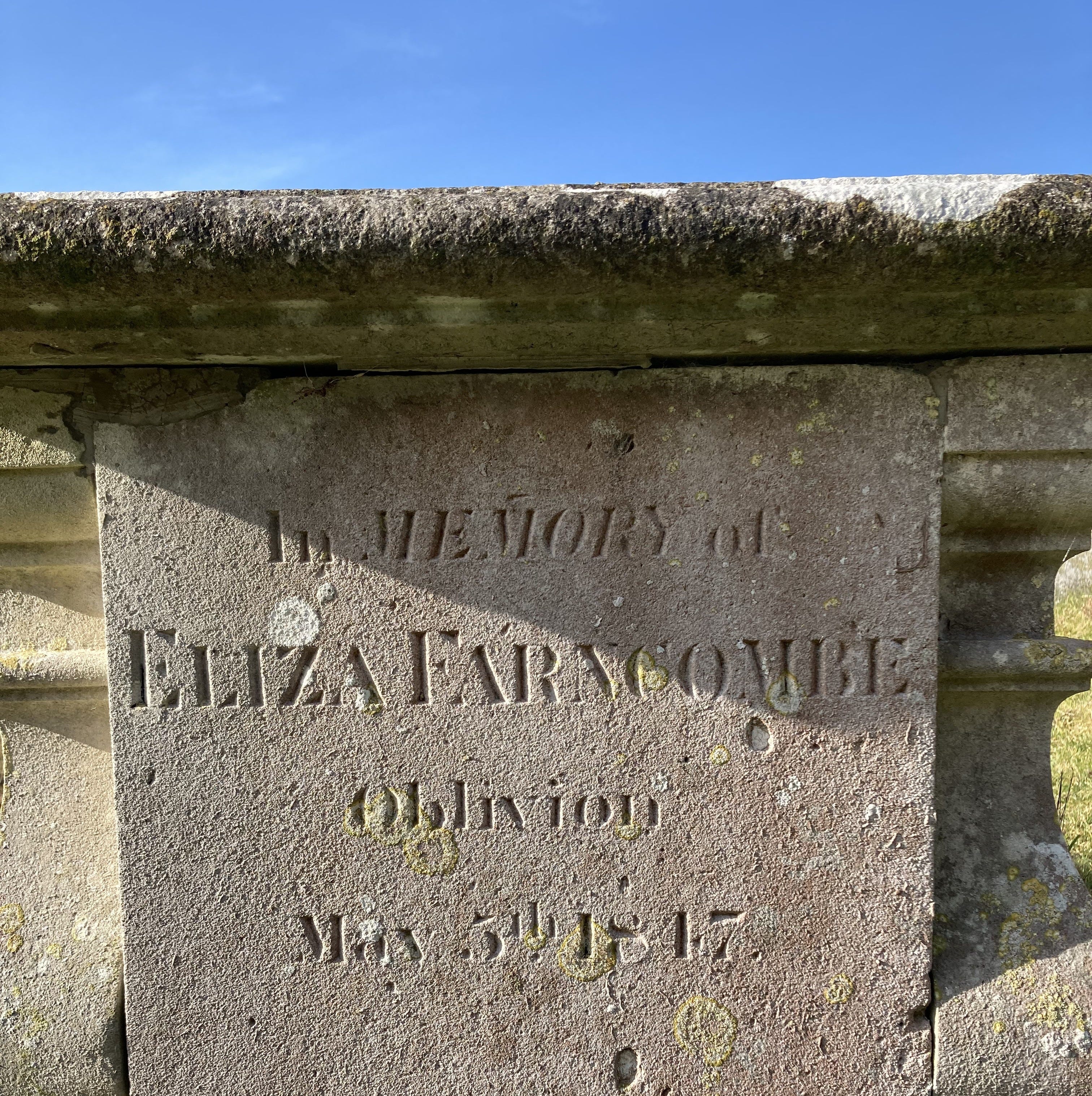
I’m also rather partial to a grave that just says it how it is:
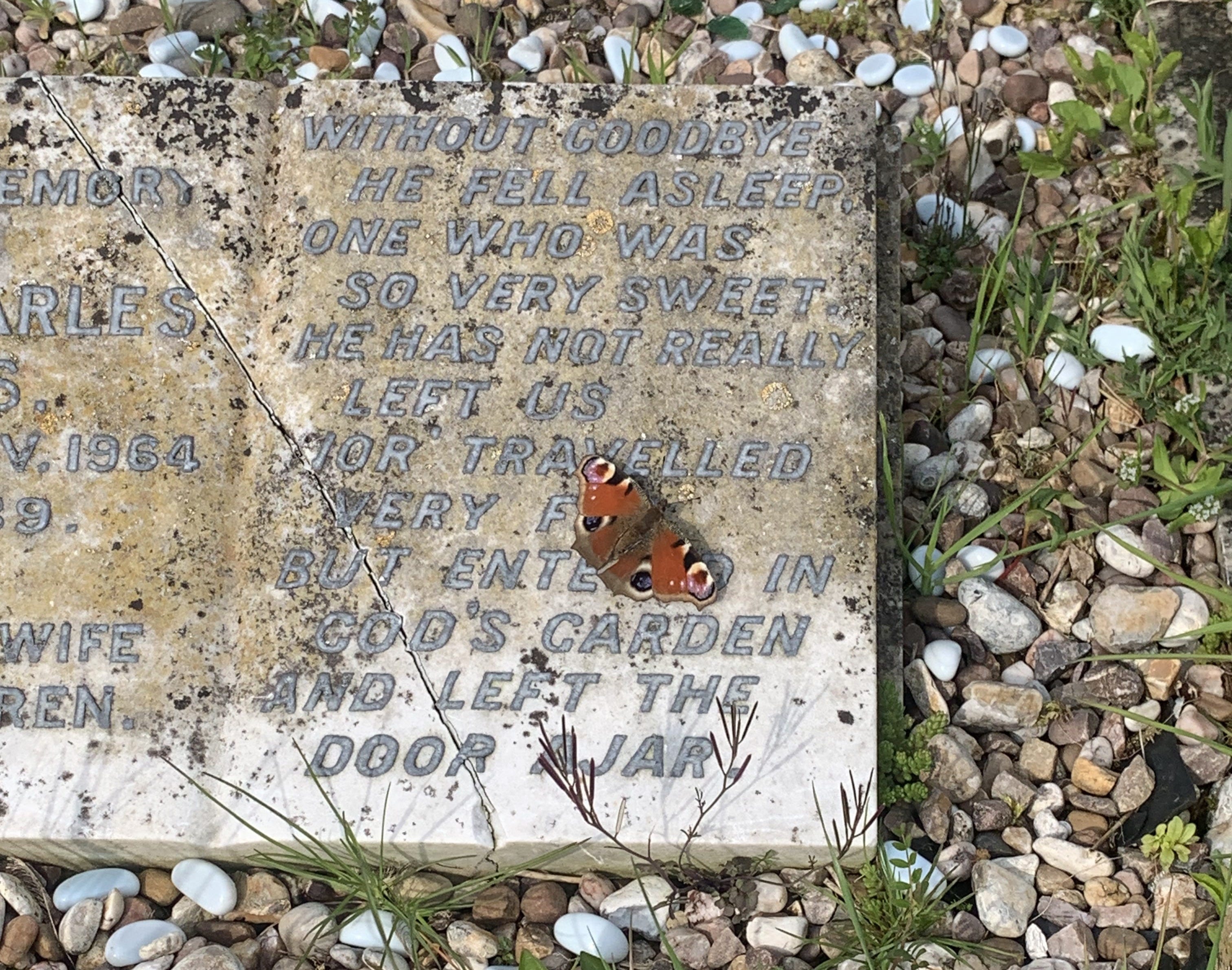
Obviously, graveyard observations have a tendency to get a little dark, but there are also serendipitous moments that make you believe there must be some kind of spiritual energy surrounding these places, no matter what you believe… Like this lil’ critter, taking a moment to rest its wings on these precise words.
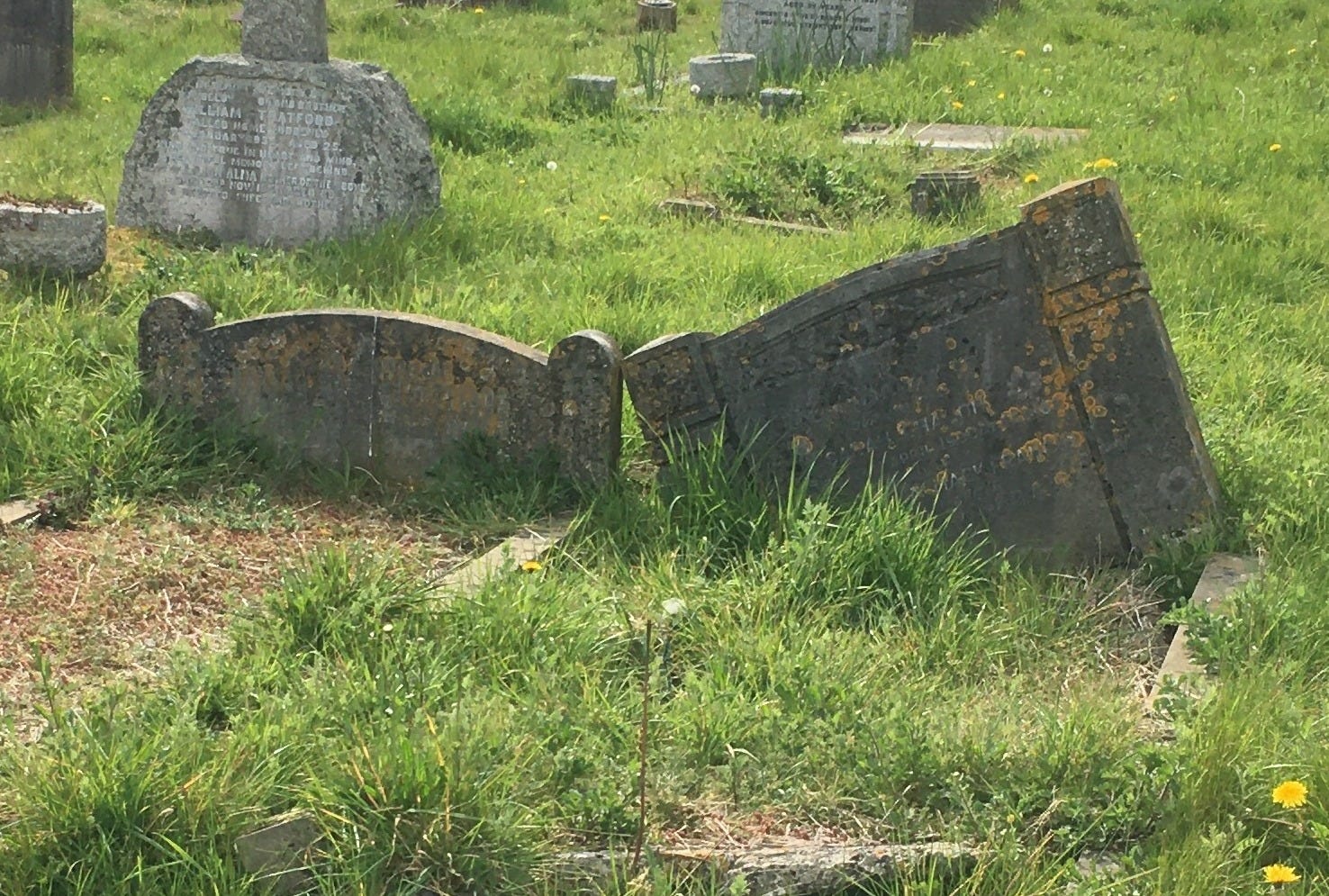
Or these two, cosying up together as they settle into the earth (or perhaps they’re just exchanging a little gossip about the gravestones over yonder):
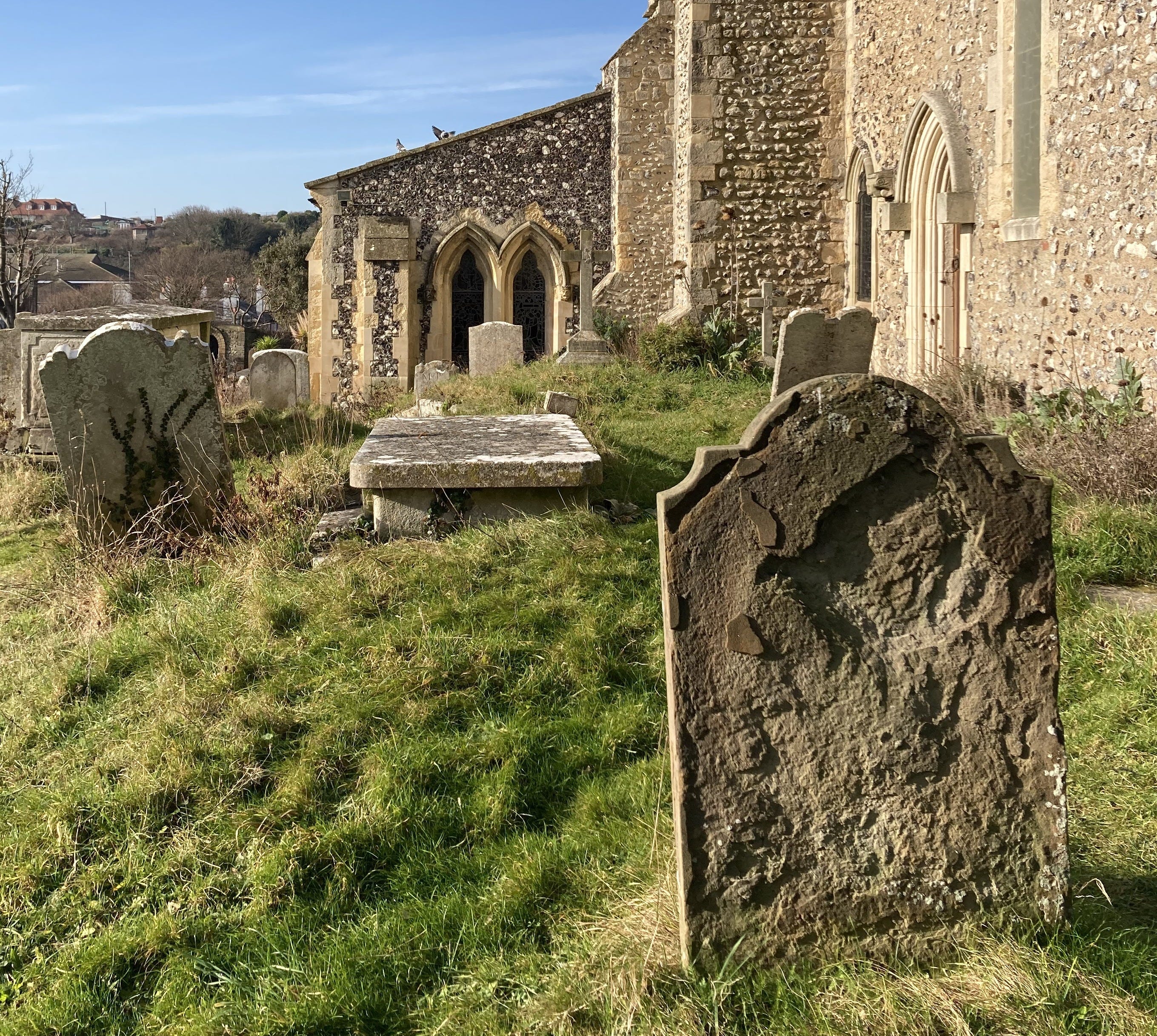
And I’m obsessed with the ones that have become utterly untraceable — cracked, broken, weatherworn, overgrown with ivy — nothing but texture and unknown history:
Or so minimalistic that their owners are reduced to initials:
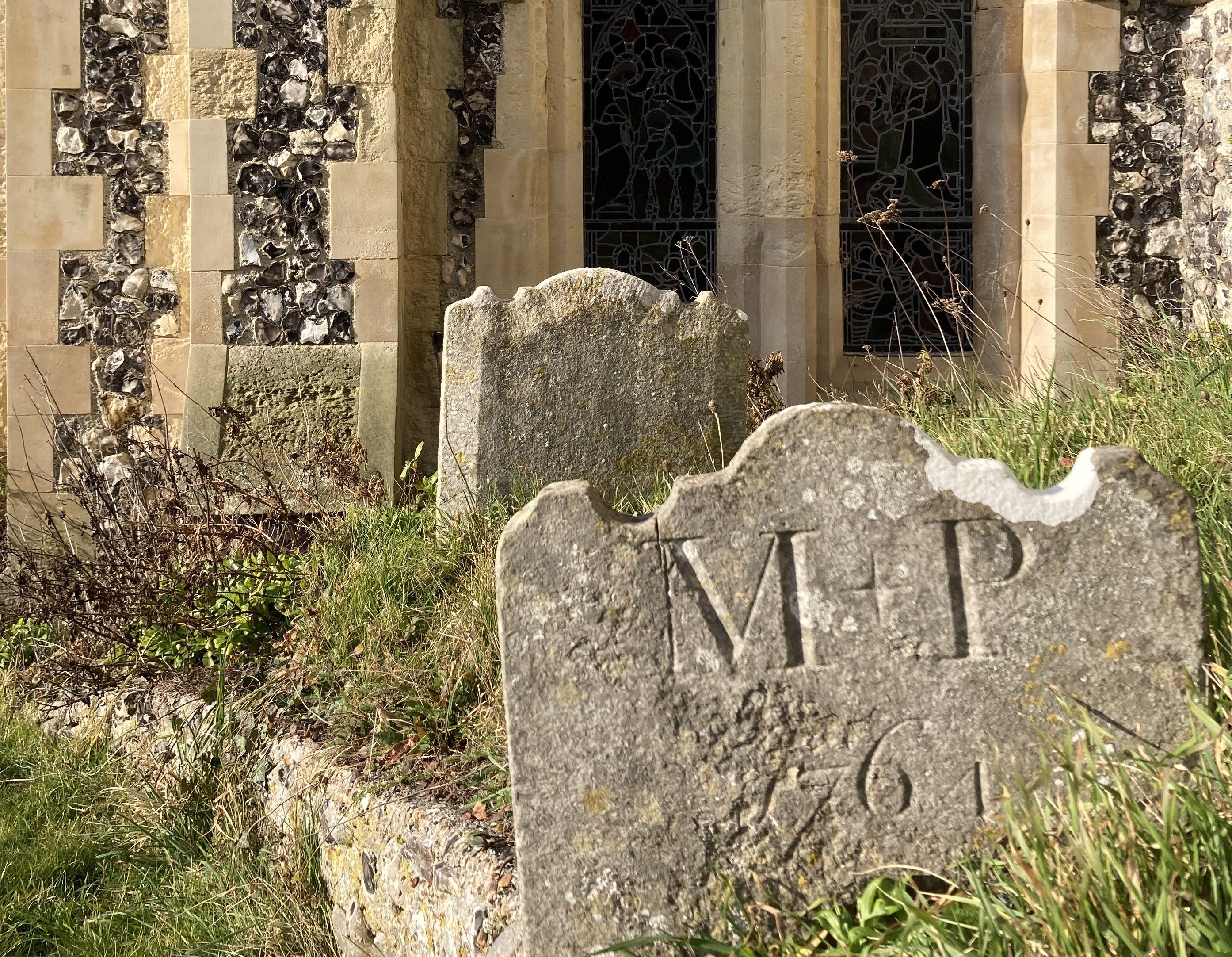
As far as I know, these kinds of markers tended to be a low-cost option when a family couldn’t afford a headstone, or a hasty option when a burial had to be quick. Of course these letters would still be identifiable to their family, and friends, but I always wonder how many generations passed before the knowledge of who they were passed out of general memory.
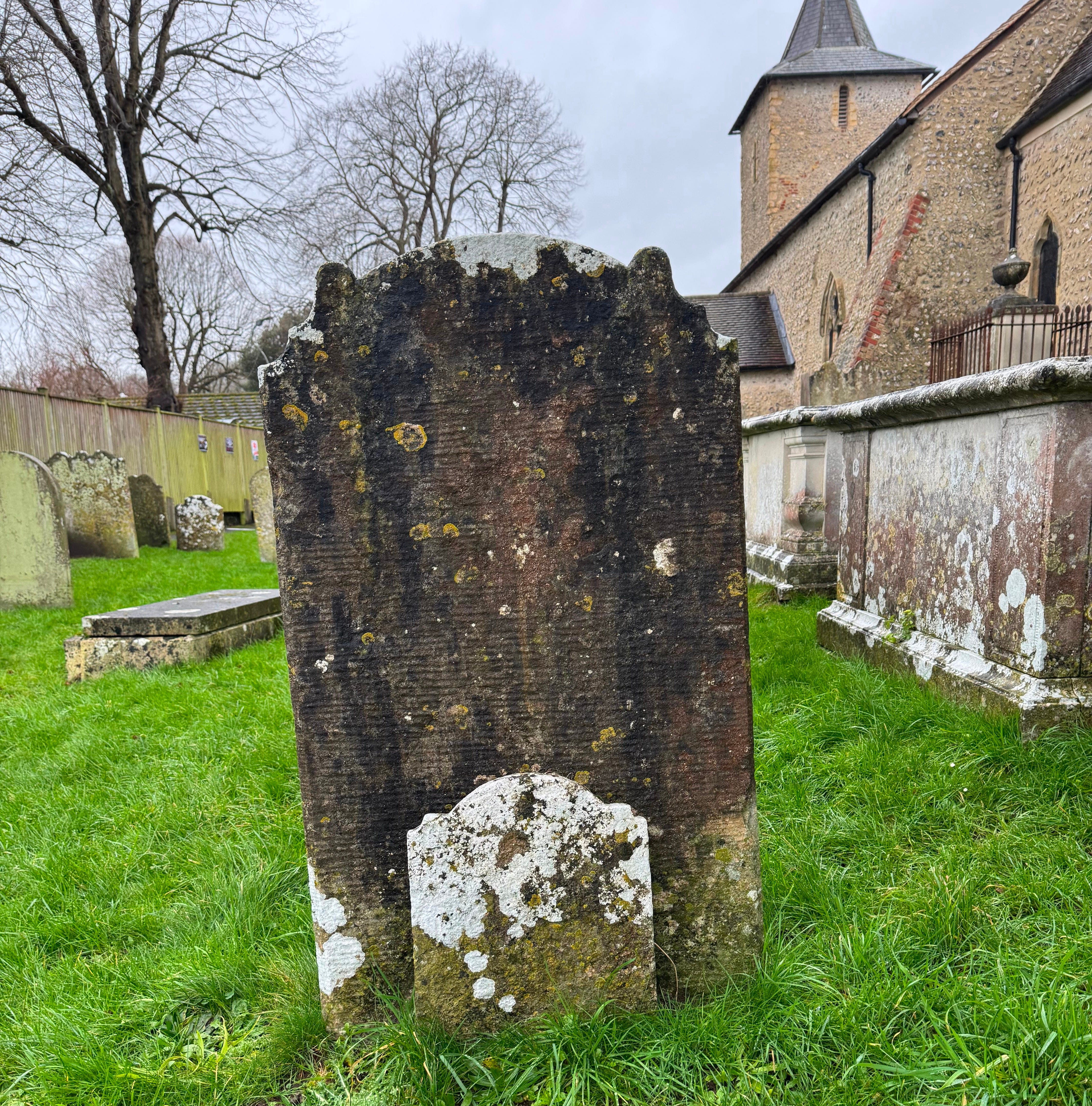
And then there are pairs of stones with no discernible lettering remaining at all. The practical explanation is that the smaller ones were originally foot stones, tidied up as the ground shifted or the graveyard expanded. The tragic explanation is that these are combined graves — a sobering reminder of the high mortality rate of childbirth in days gone by.
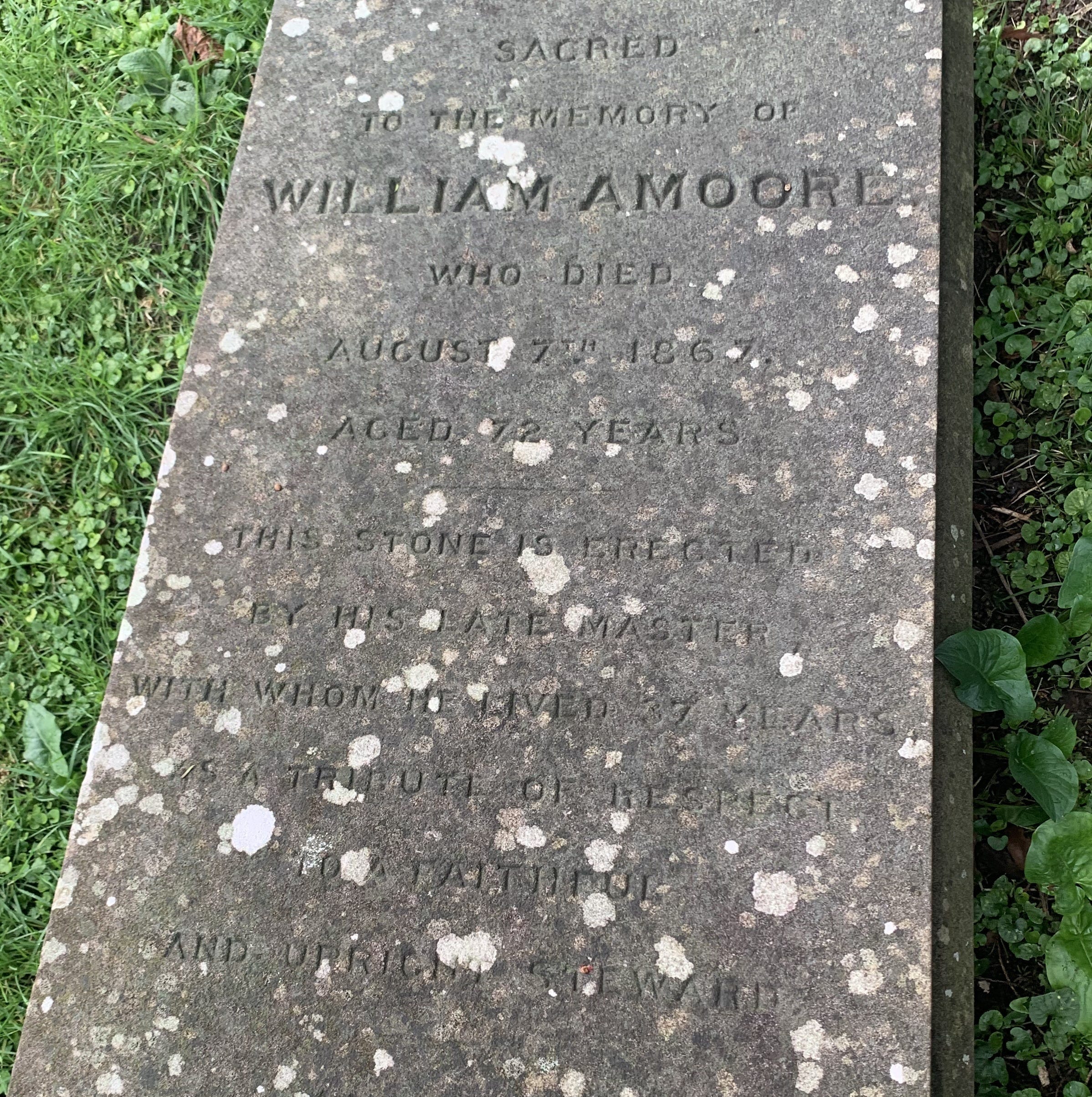
All these hypotheticals from blank stones. And even more from the ones that are still legible. Like finding four generations of the same family name scattered throughout the churchyard. Or the fifteen-year-old who must have lied about his age to join up in WWI but didn’t make it through the first year. Or this “faithful and upright steward” who served his master for more than half his life:
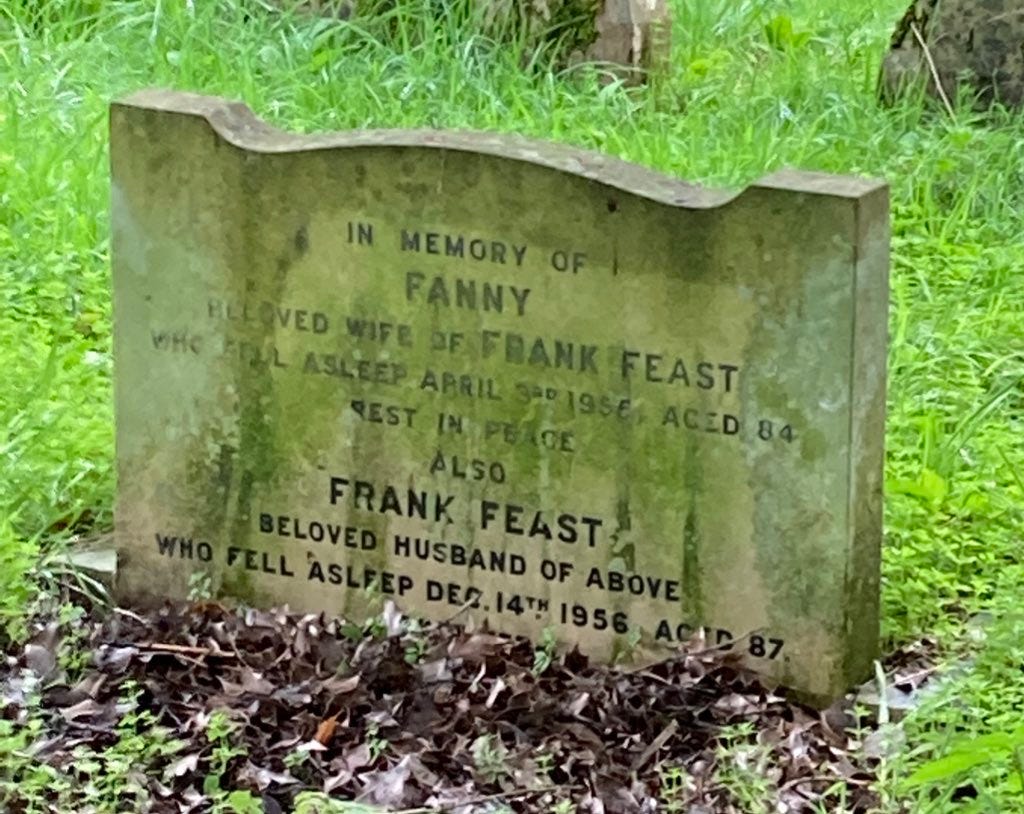
And, as the circle turns, we find ourselves back at the disrespectful beginning — where my childishness has never quite grown beyond snort-laughing at a good bit of wordplay. I therefore present to you my favourite grave of all time — found in Stanmer churchyard: the immaculately named Fanny Feast:
At this point, I don’t even know how much of my love of graveyards is about writing and stories, or if it’s more about humans and history and all those invisible connected dots that suddenly come into focus when you look close enough.
Either way, I hope there’s a nice, stony patch of grass full of dead people near you to hang around in, too. (And I’d love to hear about the treasures you find there.)
Happy writing : )

Write What You Know: Setting & Place Workshop
Write about your favourite familiar and fictional places with me on the next Write What You Know workshop (Tues 31 March) — in which we’ll play with different techniques to conjure up authentic, nuanced locations and worlds using memory, observation, sensory detail, and pure, unbridled imagination.
New to the whole concept of ‘write what you know’? Lucky for you, I’m obsessed with it. Start here »
another excellent source of names: those plaques in hospitals, libraries, any old public building often has one. I got a wonderful list while wandering the halls of the Detroit Masonic Temple.
I'm off work today, exploring the coast with my camera, I might have a wander into the churchyards around the area.
Lovely read.